
Comment devenir pasteur sans avoir suivi de formation au séminaire ni d'études supérieures
Many people sense a call to pastor and see no way to pay for a degree. Some have a family to feed and a job they cannot leave. Others live where no seminary exists.
Here is the short answer: yes, you can become a pastor without going to seminary or college. The Bible's qualifications for a pastor are about character and the ability to teach, not degrees. There are solid, structured ways to get trained without leaving your church, your family, or your job.
This page walks through what Scripture requires, how the traditional path works, and how non-formal training can prepare you well. ("Non-formal" simply means real, structured Bible training that happens outside a college or seminary campus.)
Can you be a pastor without a degree? What the Bible requires
Start with Scripture, before any school. Paul lists the qualifications for church leaders in 1 Timothy 3:1-7 and Titus 1:5-9. A pastor must be above reproach, faithful, self-controlled, respectable, hospitable, and able to teach. He must also manage his own household well.
Read those passages slowly and notice what is missing. There is no mention of a degree, a transcript, or accreditation (the official approval of a school by an outside group).
The Bible lists what a pastor must be. A diploma isn't on the list.
That does not make training unimportant. A pastor has to be able to teach, and you cannot teach what you do not know. The real question is how you get that training. Men who meet the biblical qualifications can earn a certificate when they complete BTCP's full pastoral track. You will find more in our FAQs.
The traditional path: college, then seminary
In the United States, the usual route into ministry often takes six or seven years. Most candidates earn a four-year college degree first. Then comes seminary (a graduate school for ministry) and a Master of Divinity, a degree that takes two to three more years.
Some denominations require this degree for ordination. Others use a step-by-step system of licenses before ordination. If your denomination requires seminary, talk with your church's leaders about that path.
The formal route produces well-trained leaders, but it costs a lot. Student debt can be hard to carry on a pastor's income, and many aspiring pastors piece together scholarships, a second job, and years of evenings to make it work.
For pastors in much of the world, that path is closed.
Why many pastors around the world never go to seminary
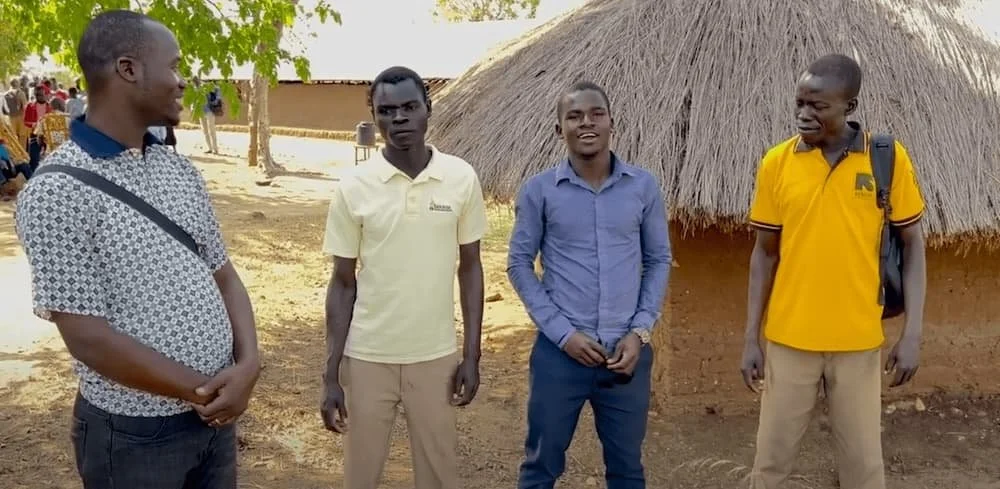
In 1988, Dr. Dennis Mock taught a week-long pastors' conference in Mombasa, Kenya. Ninety-three pastors came. Some led churches with buildings, some met in houses, and some met under trees. None of them had ever had formal Bible training. They had a call to ministry and a love for Jesus, and no way to reach a Bible college.
Dennis went home and looked for a curriculum that could train men like them right where they were. He could not find one, so he wrote it. The first class began in Kenya in 1990. That was the start of the Bible Training Centre for Pastors (BTCP), a 501(c)(3) nonprofit.
Dennis hoped to train 20 pastors a year in Kenya. The Lord had a much bigger plan. BTCP is a member of the Evangelical Council for Financial Accountability, its curriculum is used in 105 countries, and it has more than 200,000 graduates. The curriculum is now available in 45 languages. We give God the credit for all of it. Read more on our about us page.
Pastor training without seminary: how non-formal training works
You do not have to leave your community or take on debt to get thorough theological training. The BTCP model is simple and repeatable:
Face to face. Every class is live and led by a mentor. We have a firm no online policy, because ministry is relational, and so is training for it.
Local. Some classes meet in churches, some in homes, and some move from place to place, meeting wherever there is room.
Low cost. Fees are per student, per course: $20 where the class meets in North America and $11 everywhere else. Manuals are included.
No academic hoops. There are no academic prerequisites and no accreditation bureaucracy standing between a called leader and good training.
Because you keep serving in your own church while you train, you can use what you learn right away. That is pastor training without seminary, built to fit real life. See where classes meet on our locations page.
How to become a pastor: three practical steps
Step 1. Serve in your local church first. Before you lead a congregation, serve one. Lead a small group. Walk with someone through a hard season. Teach when you are asked. Lifeway Research found that seven in ten U.S. Protestant senior pastors started somewhere else in the church, such as youth ministry or an associate role, before they led a congregation. Serving lets your church's elders see your character and helps confirm your calling against 1 Timothy 3.
Step 2. Get structured Bible training. Once your church affirms your calling, you need systematic biblical instruction. BTCP's curriculum comes in three tracks:
BTCI (5 courses, 275 hours): a foundation for lay leaders and anyone ready to go deeper.
BTCL (8 courses, 400 hours): open to any committed disciple, and an excellent pipeline for raising up elders and deacons.
BTCP (10 courses, 520 hours): the full pastoral track, covering everything from Bible study methods to preaching and church administration.
See the course lists on our three tiers of training page. Classes are taught by local instructors who have theological training through seminary, Bible college, BTCP programs, or equivalent biblical education. Local churches and ministry partners recruit them.
Step 3. Seek recognition from your church. The last step is ordination or licensing by your local church or network. (Ordination is a church's public recognition that you are called and ready to serve. A license is a smaller first step toward it in some denominations.) Many independent churches and networks ordain based on character, proven fruit in ministry, and completion of a rigorous training program. That keeps you accountable to the people who know you best.
Training that multiplies
When you learn in a local class, you are also learning how to train others. That is 2 Timothy 2:2 at work: what you have heard, entrust to faithful people who will be able to teach others also.
BTCP does not run classes itself. We equip churches and ministry partners to run them. We train local teachers in a two-day teacher workshop, supply the course materials (including our digital manuals), and offer ongoing ministry consultation. You can see the full scope in our Program Summary Manual.
That is how this training has spread from Uganda to Hispanic church plants in the U.S. Read stories in our testimonials or follow along on our blog.
Lead a small group. If you are new to it, our guide to small group leader training shows how leaders are chosen and prepared.
Learning ministry by doing it
Some of the hardest parts of pastoral work are learned on the job: sitting with a grieving family, walking a church through conflict, leading a team meeting. Non-formal training has an advantage here. Students are already serving, so what they learn goes straight into their churches and communities.
Our ministry partners show what that looks like:
Crossing Cultures International has brought this training into more than 40 countries, often to hard-to-reach places where believers face persecution. Leaders are trained, then sent back to lead their own congregations.
African Leadership pairs theological training with skills communities urgently need, such as healthcare, clean water, and child protection.
Denton Bible Church helped pioneer the model that shaped BTCP's training method. Its missionaries have trained leaders in dozens of countries and languages, who return home to teach and lead.
Common questions about becoming a pastor without seminary
Do you need a degree to be a pastor? No. Some denominations require a Master of Divinity, but many independent churches, networks, and global ministries ordain pastors based on the biblical qualifications and completion of structured training. Ask your own church's leaders what they require.
Can you be a pastor without a church? A pastor shepherds a particular church, so the place to start is a local church of your own. Join one, serve there, and let its leaders see your character and gifts. If you have no church home yet, start with that before you look for training.
How do you become a preacher without college? Preaching is teaching God's Word to others, and it grows out of knowing that Word well. Start by studying the Bible in a structured way, and teach when you are asked. BTCP's pastoral track covers Bible study methods and preaching, and it is taught face to face by a local mentor.
Can you become a youth pastor without college? Yes. Churches set their own requirements, so ask your church's leaders what they look for. Many churches look first at character, calling, and the ability to teach. Serving in the youth ministry, finishing structured Bible training, and having your church affirm your calling are strong places to start.
Can you become a pastor for free? Serving costs nothing, but training does cost something. BTCP fees are per student, per course: $20 where the class meets in North America and $11 everywhere else, and manuals are included. If those fees are not workable where you live, we accept applications for a reduced rate.
Do you need to be ordained to be a pastor? Ordination is your church's or network's public recognition that you are called and ready to serve. Requirements differ, so talk with your church's leaders. Some denominations require a seminary degree. Many independent churches and networks ordain based on character, fruit in ministry, and completed training.
How long does BTCP's pastoral training take? The full pastoral track is 10 courses and 520 hours of classroom instruction. Partners set the schedule: many classes meet once a week for a few hours, and others hold week-long intensives each quarter. The first track, BTCI (275 hours), usually takes one and a half to two and a half years, depending on how often classes meet.
Can I take the courses online? No. Every BTCP class is live and face to face, led by a mentor. Character grows in relationship, and a screen cannot replace that.
Can I study with BTCP on my own? BTCP training happens in classes run by local churches and ministry partners. Check our locations page to find where classes meet, or ask your church about hosting one.
How do I get the course materials? Partners and trained teachers order manuals and resources through our ordering pageafter they complete orientation.
Start your pastoral training
If God has called you to pastor, a lack of money or credentials does not have to stop you. Thousands of pastors around the world have prepared for ministry exactly this way: in a local class, alongside other leaders, with their Bibles open.
Join a free Interest Meeting to see how classes work and how to bring one to your church, or ask us anything. You can also explore the three tracks of training first.